In this guide
- The short answer: every one to two weeks for most cars
- Why washing frequency actually matters
- What changes the right frequency for you
- Washing your car in Kuwait: heat, dust, and coastal air
- Contaminants you should wash off immediately, not on schedule
- Can you wash your car too often?
- The best time and conditions to wash
- If your car is waxed or ceramic coated
- Winter, salt, and travel: relevant even in a warm climate
- What about washing after tinting your windows?
- Do not forget the interior
- Waxing and detailing: the longer-cycle tasks
- A simple washing schedule you can actually follow
- Signs it is time to wash, whatever the calendar says
You've stood in a car park, squinting at a dusty bonnet, asking: how often should I actually wash this thing? It's one of the most useful maintenance questions you can ask. A regular wash protects your investment just as much as oil changes and tyre rotations do.
Here's the honest answer: there's no single number that fits every driver. The right frequency depends on where you live, where you park, how much you drive, and what your car's exposed to between washes. This guide walks through the baseline most experts agree on, then shows you how to adjust it for Kuwait's heat, dust, and coastal air.
We'll cover why washing matters (the science is interesting, not just the obvious), which contaminants need your immediate attention, whether you can wash too often, and a schedule that actually works. By the end, you'll set your own rhythm instead of guessing.
The short answer: every one to two weeks for most cars
Here's the number most people want: every two weeks. Industry experts quoted by AAA recommend this as part of general maintenance. AutoZone reaches the same consensus, with most drivers washing every two weeks or so. HowStuffWorks puts the general rule at roughly every two weeks year-round.
Some experts frame it differently. Cleaning expert Melissa Maker, speaking to Real Simple, suggests once a month, adjusting up or down by season and driving patterns. Detailer James Mate, interviewed by Drive, offers a more practical range: once every three to five weeks if the car stays relatively clean, up to every two weeks if it takes more grime.
The practical takeaway: wash every one to two weeks for normal daily use, and treat once a month as the floor, not the target. That's the starting point. Everything after this is about knowing when to wash more often, and Kuwait's climate is exactly the kind of reason to lean toward the frequent end.
Washing frequency at a glance
Why washing frequency actually matters
It's tempting to think washing is just cosmetic. It's not. Washing is about protection and, in real ways, performance too. Understanding why makes the schedule easier to stick to.
It protects the paint and slows corrosion
Road grime isn't inert. Dirt, salt, and moisture held against your paint increase rust risk, according to, which lists rust prevention as a core benefit of regular washing.makes the point differently: salt, dirt, acid, and dead bugs wear down paint and dull the finish over time. A clean car cuts rust buildup and corrosion that affects overall mechanical health.
Unchecked corrosion goes beyond looks. Consumer Reports warns that salt accelerates rust, damaging brakes, steering, suspension, and fuel systems—even covering sensors that driver-assistance features rely on. Washing is mechanical maintenance, not just shine.
It preserves resale value
Paint damage and corrosion are preventable. A consistently washed car holds value better.frames regular washing as an investment that maintains vehicle value and longevity, protecting paint from acidic contaminants. When you sell or trade the car, that care shows.
It makes the car safer and easier to live with
There's a real safety element to washing.notes that clean windows mean you can see the road properly, and a wash is when you'll spot new scratches or chips before they spread. Grimy glass creates glare and blind spots; clean glass saves you from both. On modern cars, keeping cameras and sensors clear matters too.recommends full-car washes so these systems keep working.
What changes the right frequency for you
The two-week baseline is an average, and almost nobody is average. Several factors push your ideal frequency higher or lower. Being honest about them is how you land on a schedule that actually fits.
Climate and weather. Ideal wash frequency depends heavily on climate and where you park, asemphasizes.adds that hot, dry climates need washing less often than wet areas with constant mud and spray. That one sentence matters for Kuwait drivers—"hot and dry" tells only half the story.
Where you park. A garaged car goes longer between washes than one parked outside, asnotes. Under a tree? Opposite problem.highlights the classic scenario: return to find your car coated in sap and bird droppings.
How much you drive. Short trips once or twice a week leave your car cleaner than high daily mileage,observes. A car that mostly sits needs washing less often than one on the road constantly.
Proximity to the coast. Living near the ocean means salt in the air affects paint color, shine, and undercarriage rust,warns. Salt and metal don't mix.reports seeing even new cars rust after sea exposure. Coastal living means washing more often.
Washing your car in Kuwait: heat, dust, and coastal air

General guides assume temperate climates with rain and winter salt. Kuwait's different enough that "every two weeks" undersells what many drivers actually need. The sources below weren't written for the Gulf, so what follows is practical local reasoning layered on top of their guidance.
Dust and sandstorms are the dominant factor. Easy to read "hot and dry means wash less" and assume desert climates are low-maintenance. The opposite is true here. Kuwait isn't just dry—it's dusty. Fine airborne dust settles on paint constantly. After a shamal, a car can go from clean to coated in an afternoon.lists dust as a reason cars get dirty even when you avoid mud. Thick dust dragged off dry scratches paint, so the takeaway is to rinse and wash more often during dusty spells rather than letting it pile up.
Intense heat and sun bake contaminants on faster. Strong sun works against you two ways. UV rays cause oxidation that fades paint,explains, and heat speeds chemical damage from anything acidic on the surface.notes that bird droppings, dead bugs, and tree sap are highly acidic and damage paint if left. Under hot sun, "too long" arrives sooner. Don't let a soiled car sit for days in Kuwait's summer.
The coast and the Gulf. For drivers near Kuwait's coast, salt air guidance fromandapplies directly: salty air accelerates corrosion, so wash more often and pay attention to the undercarriage.
Putting it together, most Kuwait drivers find a weekly wash during dusty and hot months more realistic than the temperate-climate fortnight. A garaged car driven little can still stretch to two weeks or monthly.
Contaminants you should wash off immediately, not on schedule
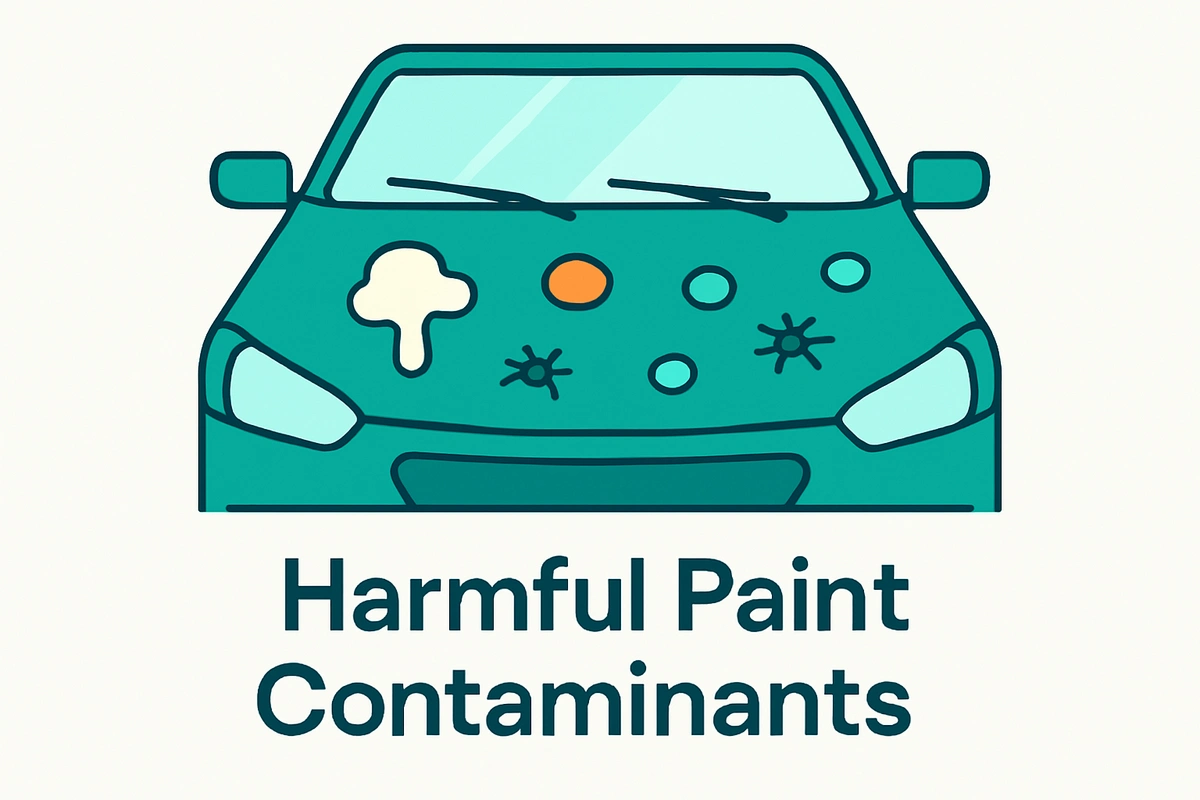
Some things need immediate washing, not the scheduled kind. Clock starts the moment they hit the paint. In Kuwait's heat, it ticks faster.
- Bird droppings. Acidic enough to eat through paint if left, warns, echoed by. Remove immediately.
- Dead bugs and tree sap. Both acidic and should wash off soon rather than bake on, perand.
- Anything strongly acidic or alkaline. Detailer Josh Bunter, quoted by, explains that anything with pH above or below seven—bug guts, bird droppings, acid rain—should be removed immediately to avoid etching paint. Ordinary tap water sits at roughly 6.5 to 8.5 pH, so even water spots risk harm on unprotected paint. Dry the car; don't let it evaporate.
- Salt. Coastal air or sea exposure: salt corrodes metal and causes rust,warns. Rinse it off, don't let it sit.
- Paint splashes and tar.recommends dealing with stray road paint or spills promptly—power-wash what you can, then polish while the clear coat's intact.
Common thread: for these, frequency doesn't matter. Same-day spot wash beats waiting for Saturday.
Can you wash your car too often?
Common worry, reassuring answer: for most drivers, the risk isn't washing too often but washing badly. Method matters; frequency doesn't.
Old paint could dull if washed aggressively, but modern paint is tougher,explains. You could wash daily if you wanted. Damage more likely from not washing enough than from washing too much.agrees: gentle hand wash with microfiber or professional detailing won't damage paint, no matter the frequency.
Damage comes from technique.warns that a dirty sponge with trapped grit or automated brushes cause micro-scratches each time. Fix the method, not the frequency:
Use the two-bucket method: one bucket of soapy water, one of clean water to rinse grit off your mitt, asdescribes. Choose a quality microfiber wash mitt over a hard sponge because it minimizes grit being rubbed into the paint,advises. Keep a separate mitt for the wheels and tires, the dirtiest parts.
One more thought on diminishing returns. James Mate tellsthat while you can't really wash too much, if the car stays clean, washing after every drive wastes effort. In dusty Kuwait that threshold moves fast, but on a clean, garaged car you can ease off.
The best time and conditions to wash
Most guides skip when to wash, just the how-often. In hot climates, timing matters. A scorching car in midday sun means water and soap dry before you can rinse, leaving water spots thatwarns unprotected paint can't handle. Wash early morning, evening, or in shade—panels shouldn't be baking. Water evaporates fast and acidic residues damage hot paint quickly. Professional wash services solve this because they dry properly.
If your car is waxed or ceramic coated
Common follow-up: does wax or ceramic coating change wash frequency? Short version: protected paint stays cleaner and resists damage better, but you still need to wash, and the protection needs renewal.
Detailer Josh Bunter tellsthat for maximum protection, UV protection like wax or ceramic coating matters more than sheer washing frequency—as long as no harsh chemical contaminants sit on the paint. Ceramic coating is chemical-resistant, UV-blocking, and highly hydrophobic (repels water, makes washing and drying easier). Coating lowers the stakes of each wash but doesn't eliminate contaminants that still need prompt removal.
Protection fades and needs renewal.recommends waxing twice yearly as a protective layer that makes grime easier to clean.suggests twice yearly too, with a simple test: water beads up means you're still protected; flat water means re-wax.is more conservative, noting wax benefits fade within weeks, recommending fresh coats roughly once a season. Practical takeaway: wash normally but don't assume coatings last forever. Reapply protection seasonally to twice yearly.
Winter, salt, and travel: relevant even in a warm climate
Most seasonal advice targets snowy regions with salted roads. Not Kuwait. Still worth understanding—it explains the salt-and-rust logic and applies if you travel or drive near the coast.
Snowy areas get monthly washes during salt season, or more if salt-coated, using touchless washes that clean the undercarriage (where salt collects).notes you wash more in winter because road salt cakes on and wreaks havoc. Hand-held pressure wands help clear salt buildup.
This translates to the Gulf.says you don't need undercarriage washes in good weather, but it helps after mud or in salted areas. Same reasoning applies to coastal salt air. Drive near the sea regularly? Occasionally wash the undercarriage as a precaution against corrosionassociates with salt.
What about washing after tinting your windows?
One question: can you wash right after tinting windows? The automotive sources don't cover this. General guidance: freshly applied film needs time to cure. Interior glass and rolling windows down too soon are the main risks. Exterior wash is usually fine, but curing times vary by product and weather. Follow the tinter's specific advice. When in doubt, wait a few days and avoid aggressive contact with tinted areas.
Do not forget the interior
Washing is interior work too, on its own schedule.recommends vacuuming crumbs, pet hair, and particles to reduce upholstery wear, and cleaning stains with appropriate cleaners.suggests a practical rhythm: clean interiors monthly (remove items, spot-clean stains, vacuum, wipe trim), clean interior windows and windshield at least quarterly to reduce glare.
Leather needs more attention in hot, sunny climates.advises cleaning and conditioning every three months to prevent drying and cracking.agrees but adds a caveat: if you drive a lot or the interior gets heavy sun, condition every two months. Parked cars in Kuwait take brutal sun. Two months is the sensible default here.
Waxing and detailing: the longer-cycle tasks

Beyond routine washing sit two less frequent jobs that round out a maintenance routine.
Waxing protects paint between washes.andsuggest twice yearly.leans toward once seasonal because wax fades within weeks. Wax helps salt, sap, bugs, and droppings slide off or adds a layer between them and the finish,explains.
Detailing is the occasional deep clean.describes it as going far beyond a standard wash—meticulously cleaning every interior and exterior area.compares it to spring cleaning and notes you don't need to do it regularly. Realistic rhythm: wash every couple weeks, wax every six months, detail every few months.
On wash choice: cheap isn't always better.cautions that unusually cheap washes cut corners—caustic soaps lift dirt but harm the finish. Skip add-on tire treatments too. Tire makers recommend just soap and water; rubber already has built-in antioxidants and waxes.
A simple washing schedule you can actually follow
Putting it together, here's a practical starting framework. Adjust up during dusty spells and hot months. Ease off if your car is garaged and lightly driven.
- Exterior wash: every one to two weeks as a baseline, moving toward weekly during dusty, sandy, or high-heat periods, and after any sandstorm. Once a month is the minimum for a lightly used, sheltered car.
- Spot wash on demand: immediately for bird droppings, dead bugs, sap, tar, paint splashes, and salt, no matter when you last washed.
- Interior clean: about monthly for vacuuming, wiping, and spot-cleaning; interior glass at least quarterly.
- Leather conditioning: every three months, or every two months if the car takes a lot of sun or high mileage.
- Wax or protective coating: roughly every season to twice a year; use the water-bead test to check.
- Full detail: occasionally, a few times a year, as a deeper reset rather than a routine.
These are dials, not fixed rules. Every source says the same thing: match your washing to what your car actually faces.
Signs it is time to wash, whatever the calendar says
Sometimes the calendar is beside the point. Watch for these cues instead:
Watch for these cues
- A visible film of dust or grime, especially after a dust storm (airborne dust settles constantly,notes)
- Bird droppings, sap, or dead bugs on the paint (acidic and damaging if left,flags)
- Glare or reduced visibility through windows and mirrors (safety issue,highlights)
- Water no longer beading (wax protection worn off,notes)
- Any exposure to salt or the sea (accelerates rust,andwarn)
Any of these? Don't wait. A prompt wash is the cheapest paint protection available.
The bottom line
How often should you wash? For most drivers, every one to two weeks is the baseline, with once a month as the floor. But that's just a starting point. Kuwait's dust, sun, and coastal salt air push toward the frequent end—especially after dust storms.
A garaged, lightly driven car can stretch to the standard fortnight. Layer in immediate spot-washes of acidic stuff, gentle two-bucket technique, monthly interior cleans, and seasonal wax, and you have a routine that protects both appearance and mechanical health for years.
If keeping that rhythm feels like one more chore, that's where Wash & Polish helps. They offer mobile car wash service across Kuwait—exterior wash, careful drying, interior clean with proper products and technique. Your car stays protected against dust and heat. No calendar thinking required. Regular fortnightly visits or post-sandstorm cleans, whatever works.